
Netverse: Why Successful AI Adoption Starts With People, Not Technology
NetMonkeys brought business leaders together in Manchester to explore AI adoption, governance, digital transformation and the practical applications of artificial intelligence.

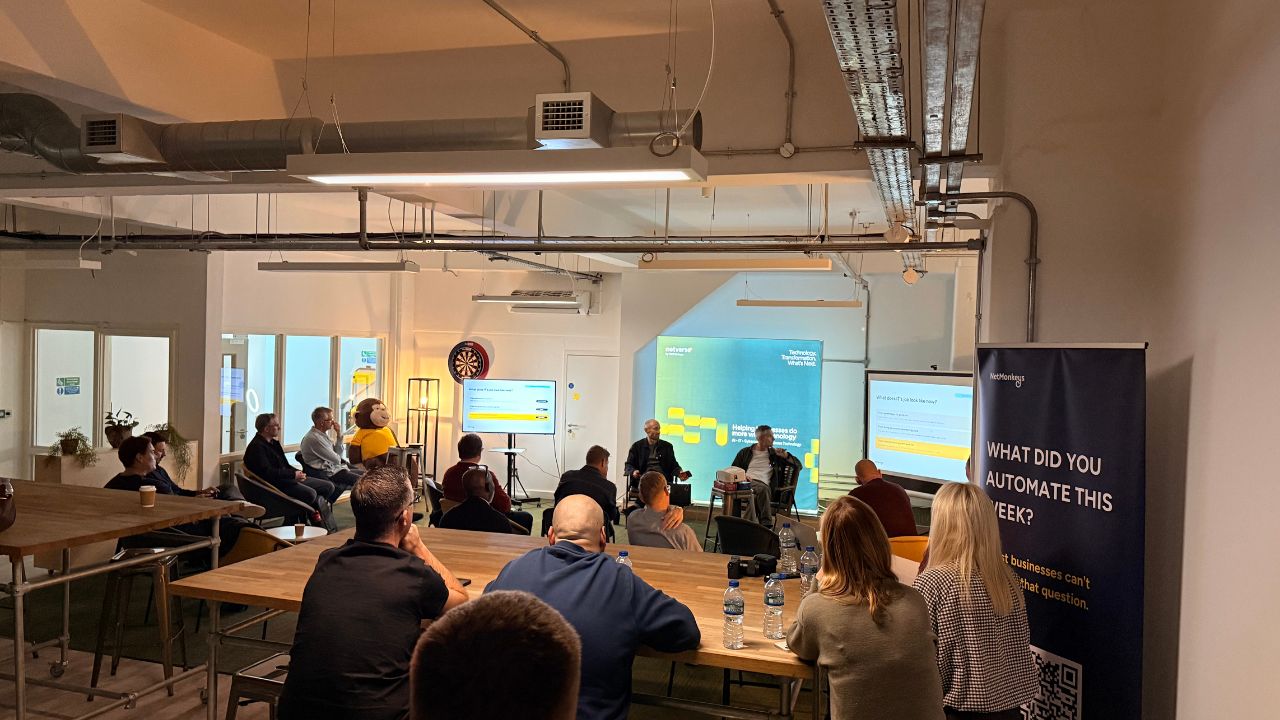
Artificial intelligence is becoming an increasingly important part of business operations, but knowing which tools are available is only one part of the challenge. For organisations looking to turn AI into a genuine business advantage, the bigger questions concern ownership, governance, adoption, and how the technology can solve real operational problems, rather than simply add another subscription to the stack.
These were among the key themes at Netverse, a summit organised by NetMonkeys to drive conversations across AI, IT, and software. Centred on the theme Business in the Age of AI: Technology, Transformation & What Comes Next, the event brought business and technology leaders together in Manchester on 8 October 2026 to explore how businesses can move beyond experimentation and develop a more considered approach to the technology.
The programme featured discussions led by NetMonkeys Managing Director Nick Gall and founder Mike Dixon, alongside a live demonstration of Lumos AI by Darren Cawdry, Head of Software at NetMonkeys.
Businesses need to treat AI as an organisational capability, supported by clear ownership and practical implementation, rather than as just another piece of software to deploy and hope for the best.
AI Adoption Needs an Owner
One of the most important questions facing businesses exploring AI isn't "which tool?" It's "who's responsible for making this work?"
Many organisations are already experimenting with AI assistants, automation tools and data analysis platforms, often without realising how widespread that experimentation has become. Individual employees may be using AI to write content, summarise information, research problems or speed up routine tasks. Without a coordinated approach, though, these activities tend to stay disconnected, isolated wins for individuals rather than contributions to a wider business objective.
Appointing an AI owner helps bridge that gap. They don't need to be a dedicated AI engineer or a newly hired executive. Depending on the size and structure of the organisation, the responsibility could sit with an existing technology leader, operations director, digital transformation lead, or another suitably placed member of the leadership team.
What matters is that someone holds clear responsibility for coordinating the organisation's approach to AI: identifying suitable use cases, helping teams understand the technology, establishing appropriate safeguards, and measuring whether implementations are actually delivering what was promised.
As Nick Gall's contribution to the summit made clear, businesses need to approach AI strategically, looking past the tools themselves to understand where the technology can create meaningful value. This is precisely the role our AI consulting services are built around: helping leadership teams work out where AI genuinely fits, rather than adopting it because it's the technology everyone is talking about.
The role also keeps AI adoption tied to business priorities. Rather than introducing technology because it's attracting attention, organisations with a named owner can assess opportunities against operational need, measurable benefit, and the resources actually available to implement them properly.
Governance Must Develop Alongside Adoption
Giving someone responsibility for AI is only the starting point. Businesses also need to think about how the technology gets used safely, consistently and responsibly across the organisation.
Governance becomes particularly important once employees start using multiple AI tools across different departments. Without clear guidance, organisations can lose track of what information is being shared with external platforms, whether AI-generated outputs are being checked before they're relied on, and who's accountable when something goes wrong.
A practical governance framework should set out which tools employees can use, what data they're allowed to process through them, when human approval is required, and how AI-assisted decisions get reviewed. It should also address data protection, information security, access permissions, and the risk of inaccurate or misleading outputs being treated as fact.
An AI owner can coordinate these responsibilities, working alongside IT, cybersecurity, legal, compliance and operational teams where needed. For many businesses, this is also the point where AI governance overlaps directly with wider managed cybersecurity practice, since the access controls, data protection and monitoring that keep a business secure are the same foundations that make AI governance workable rather than theoretical.
Governance shouldn't be a brake on adoption
The objective is clear boundaries within which people can experiment, learn and introduce useful applications with confidence, not a lengthy approvals process that quietly kills adoption. For smaller businesses, this doesn't mean standing up a complicated committee. It means starting with proportionate controls and revisiting the approach as AI use expands.
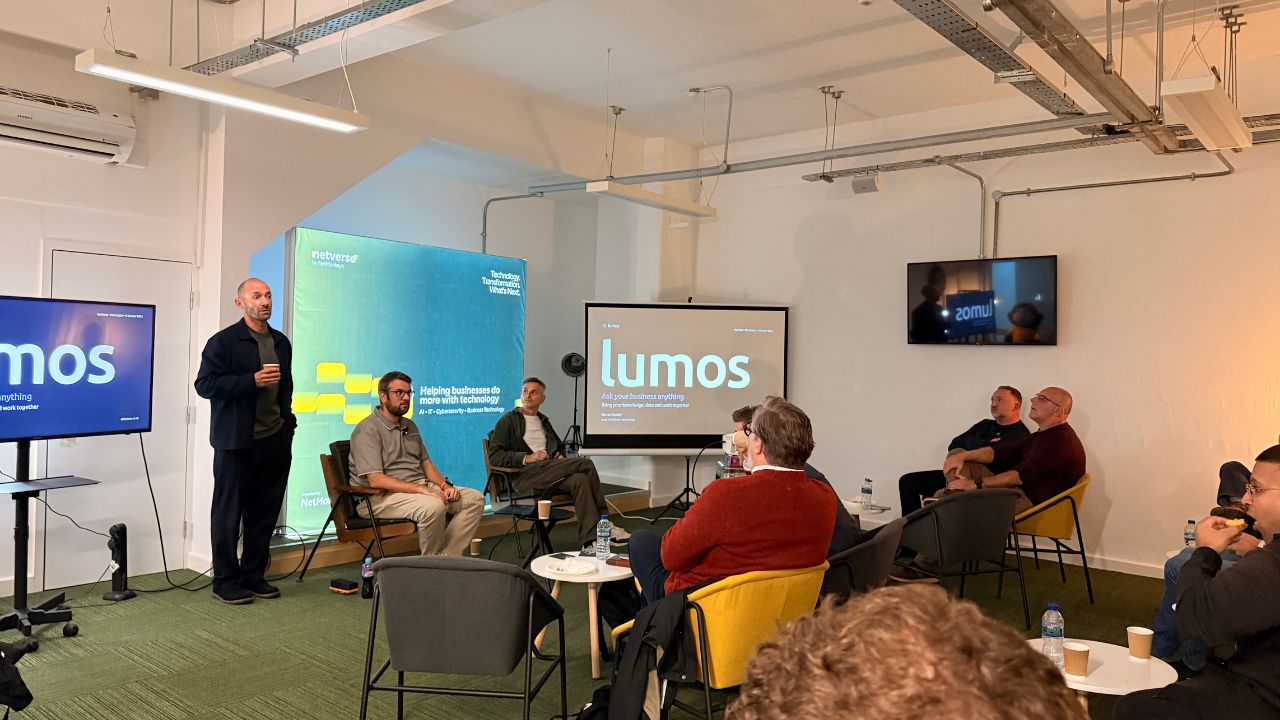
Moving Beyond the AI Hype
The discussion at the summit also reflected a wider challenge facing business leaders: telling the difference between what AI could theoretically do and what will genuinely improve their organisation.
AI can support a broad range of activities, from customer service and document processing to reporting, forecasting and workflow automation. But not every process needs AI applied to it, and not every implementation will produce a worthwhile return just because it's technically possible.
Businesses should start by understanding their existing processes, identifying where problems recur, and working out where technology could make a measurable difference. That might mean reducing the time employees spend searching for information, improving access to operational data, automating repetitive administrative work, or helping teams make decisions using information that was previously too difficult or time-consuming to analyse.
Mike Dixon, founder of NetMonkeys, also contributed to the event's wider discussion about how business technology is changing and the practical decisions facing businesses navigating it.
The key consideration for most organisations is how to connect technology investment with commercial outcomes. AI adoption is far more likely to succeed when it addresses a clearly defined problem, has support from the people expected to actually use it, and can be evaluated against an objective set in advance, rather than judged retrospectively by whether it "feels" useful. This also means recognising that successful implementation involves more than deploying a new tool: existing systems, data quality, employee training and established working practices all shape the result, which is why initiatives that treat AI as a wider digital transformation project, rather than a bolt-on tool, tend to hold up better once the initial novelty wears off.
Lumos AI Demonstrates the Potential of Accessible Business Intelligence
A practical highlight of Netverse was the live demonstration of Lumos AI, delivered by Darren Cawdry and developed by the NetMonkeys software team.
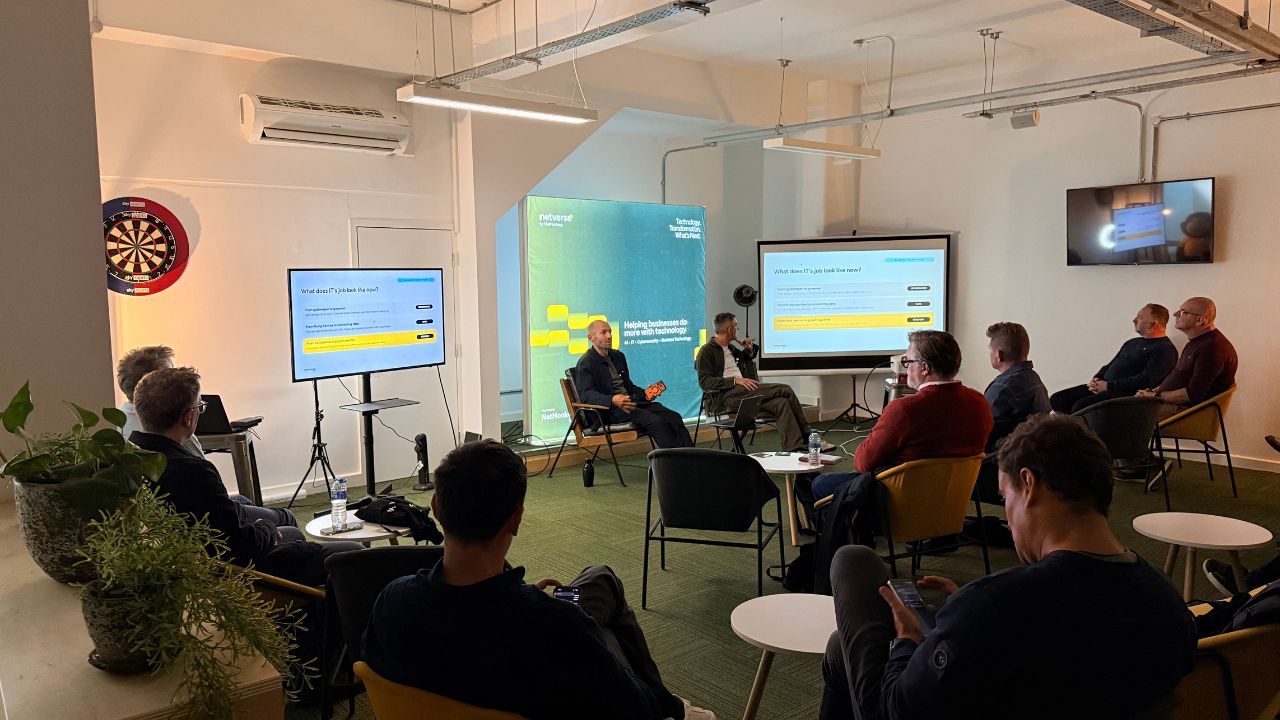
Lumos AI is designed to let organisations interact with their own business information using natural language. Rather than relying exclusively on conventional reporting interfaces or specialist technical knowledge, users can ask questions about connected business data and get answers back that support their own analysis and decision-making.
The demonstration showed how AI can offer a more accessible way into operational information, surfacing useful insight from business systems without requiring every question to be routed through a report-writer.
For many organisations, valuable information already exists across databases, business applications and internal knowledge sources. The challenge isn't a lack of data; it's making that information accessible to the people who need it, at the point they need it. Traditional reporting, including the dashboard-driven Power BI services many of our clients already rely on, remains important for structured, recurring reporting. But answering a new, one-off question can still mean waiting on a specific report, additional analysis, or help from someone with the right technical skills.
Conversational analytics offers a different route into the same problem, letting users ask questions in everyday language and explore the information relevant to their own work directly. How far this goes depends on the quality of the underlying data, the systems connected to the platform, and the controls governing access and use. AI-generated answers also need to be checked appropriately, particularly when they're informing financial or operational decisions rather than simply satisfying curiosity.
For businesses, the opportunity is to get more value from information they already hold, while removing some of the friction involved in accessing and interpreting it. The Lumos AI demonstration brought this principle into the wider summit discussion directly: AI becomes genuinely useful once it's connected to real business processes and information, rather than treated as a standalone novelty sitting apart from the rest of the organisation's business intelligence work.
Building a Practical Roadmap for AI
The discussions at the summit point towards a structured approach for organisations that want to make real progress with AI, rather than another round of disconnected pilots.
Identify the operational challenge
This gives a clearer basis for deciding whether AI, automation, or another technology entirely is the right fit.
Establish ownership
Someone needs responsibility for coordinating opportunities, engaging stakeholders, and keeping initiatives aligned with business priorities rather than individual enthusiasm.
Develop proportionate governance
Covering data security, approved tools, accountability and human oversight.
Support employee understanding
Training and clear communication are essential if adoption is going to extend beyond a small group of early enthusiasts.
Measure the results
Time saved, improved access to information, reduced manual effort and better service delivery all help determine whether an initiative is delivering real value, or just activity.
This approach lets organisations learn from smaller implementations, refine their processes, and expand what works based on evidence rather than assumption, often with robotic process automation and system integration work sitting alongside the AI itself to connect new capability to the systems a business already runs on.
What Comes Next for Business Technology?
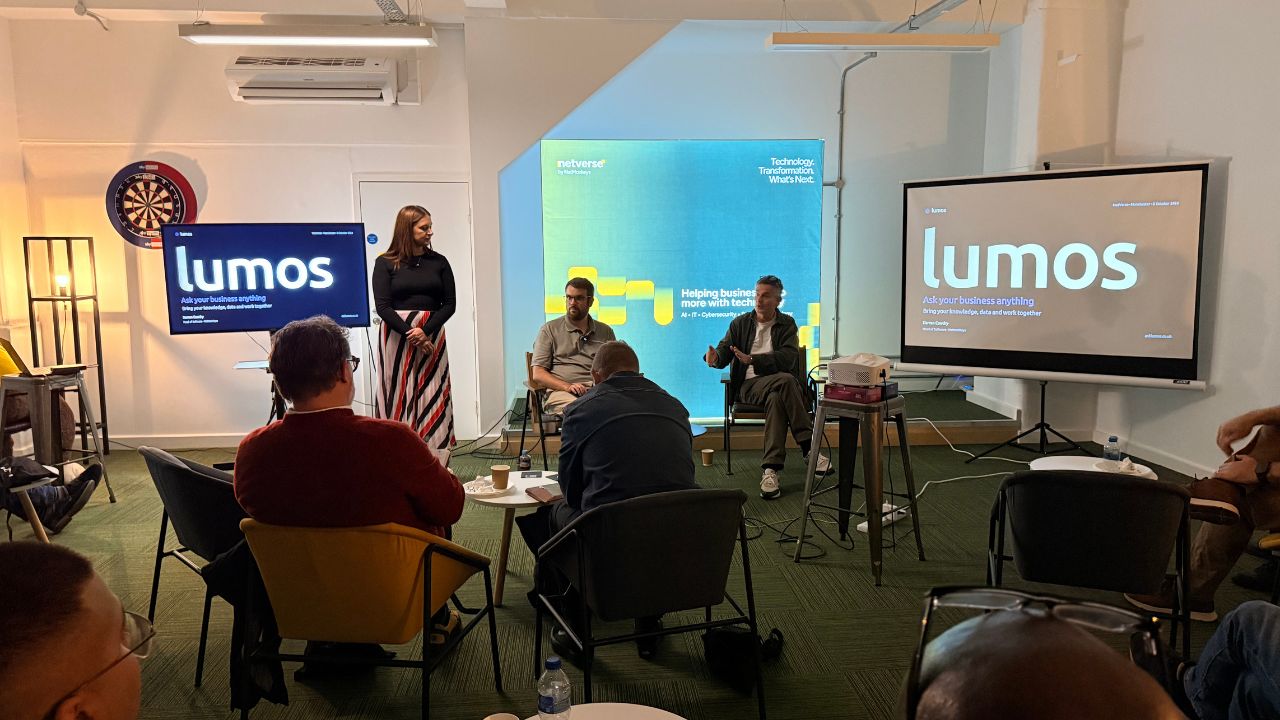
Netverse is a dedicated summit organised by NetMonkeys to drive conversations across AI, IT, and software. The event was designed to encourage practical conversations about AI strategy, digital transformation, and the technology decisions shaping modern organisations, not to sell a single vision of where AI is headed.
The event reinforced an important principle: AI adoption is as much an organisational challenge as a technical one. Businesses need the right tools, but they also need people who understand the opportunities, leaders who take responsibility, and governance that enables innovation without ignoring risk.
Through its work across managed IT services, cybersecurity, business software, data and analytics, software development and AI, NetMonkeys helps organisations work out how these areas fit together within a wider technology strategy, rather than treating each as a separate purchase.
The launch demonstration of Lumos AI gave a practical example of the company's own software development work, while the discussions led by Nick Gall and Mike Dixon explored the broader business considerations behind technology adoption more generally.
As AI capabilities continue to develop, businesses that establish clear ownership, build employee confidence and focus on measurable outcomes will be better placed to make informed decisions about where the technology genuinely belongs in their organisation. The next stage isn't simply about adopting more AI. It's about using it with purpose.
Where to Start
If the summit raised more questions than it answered about where AI fits in your own organisation, that's a reasonable place to begin. Our AI consulting company works with leadership teams to identify real use cases, establish ownership and governance, and connect AI to the systems and data a business already has, rather than starting from the tools and working backwards. For organisations planning a broader shift, our digital transformation services take the same structured approach across the wider technology estate, from legacy systems and data quality to employee training and change management.
About NetMonkeys
NetMonkeys is a UK technology and IT services provider supporting organisations with managed IT services, cybersecurity, Microsoft technologies, cloud, business software, data and analytics, software development and artificial intelligence. Through its technology and software teams, NetMonkeys helps businesses assess, implement and manage technology to support operational efficiency, security and business performance.
Explore Our AI and Digital Transformation Services
AI Consulting Services
Identifying real AI use cases, ownership and governance built around your business, not the tools.
View Service → TransformationDigital Transformation Services
A structured approach to legacy systems, data quality, training and change management.
View Service → Business IntelligenceBusiness Intelligence Consultants
Turning existing business data into accessible, decision-ready reporting and insight.
View Service → AutomationRobotic Process Automation
Connecting new AI capability to the systems and processes a business already runs on.
View Service →Work Out Where AI Genuinely Fits in Your Business
Our AI consulting and digital transformation teams help leadership teams build ownership, governance and a practical roadmap, starting from your business problems rather than the latest tool.
Speak With Our AI Consultants 0161 834 9345
